Looking for a Reliable Parts Supplier? Get a Quote Today

India–EU Trade Deal Opens New Opportunities for India–Europe Business Partnerships
The “mother of all trade deals” is more than political news — it creates a favourable environment for Indian businesses serving UK and EU clients.
1/27/20262 min read
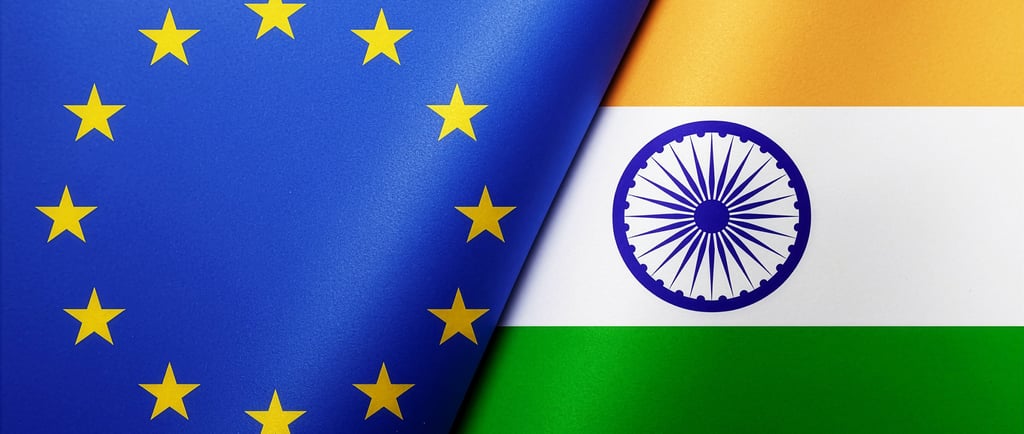
In January 2026, India and the European Union announced what leaders on both sides called the “mother of all trade deals” — and that description is not an exaggeration. After nearly two decades of stalled negotiations, the agreement marks the most significant shift in India–EU economic relations to date.
Together, India and the EU represent almost 25% of global GDP and a combined market of over two billion people. More importantly, this deal fundamentally reshapes how goods, services, and professionals move between the two regions.
What Actually Changed (Beyond the Headlines)
This agreement goes far beyond symbolic diplomacy. It delivers concrete structural changes:
Massive tariff reductions on key European exports such as machinery, electrical equipment, chemicals, aerospace components, and vehicles
Motor vehicle import duties into India, previously as high as 110%, will drop to 10% under a quota of 250,000 units — a scale far larger than any previous trade concession
Preferential access for Indian exports into the EU, particularly in textiles, leather goods, marine products, gems, jewellery, handicrafts, and processed foods
A new mobility framework that simplifies short-term movement of professionals between India and EU countries
At the same time, India has deliberately protected sensitive domestic sectors such as dairy, cereals, poultry, and certain agricultural products, ensuring growth without destabilising local producers.
This is not reckless liberalisation — it’s strategic trade engineering.
Why This Deal Matters Right Now
Timing matters. This agreement lands in the middle of global trade instability:
India is still facing punitive US tariffs and stalled negotiations with Washington
The EU is navigating escalating trade friction with the US
Both sides are actively reducing dependence on unpredictable supply chains
The message is clear: India and the EU are choosing cooperation over confrontation.
For manufacturers, exporters, and sourcing businesses, this means one thing — trade corridors are being rewired.
The Real Opportunity: Manufacturing & Sourcing
For businesses involved in component manufacturing, machining, casting, forging, or export-oriented production, this agreement is a structural advantage:
Indian manufacturers gain easier access to EU buyers with reduced cost barriers
European companies gain cost-efficient, scalable manufacturing options without tariff penalties
Supply chains can be redesigned for speed, redundancy, and long-term stability
This is especially relevant for sectors like automotive components, industrial machinery, electrical assemblies, and engineered parts — areas where India already has deep manufacturing capability and cost advantages.
What Businesses Should Be Doing Now
Waiting is a mistake. The smart players will move early.
Audit which of your products now qualify for tariff reductions
Rework pricing models for EU-bound exports
Strengthen compliance, quality systems, and documentation to meet EU standards
Build long-term supply partnerships instead of one-off transactions
Trade deals don’t create winners automatically. Execution does.
Final Thought
This is not just India’s biggest free trade agreement — it’s a signal that global manufacturing is shifting away from single-country dependence toward diversified, resilient partnerships.
For businesses positioned between India and Europe, this deal isn’t news.
It’s a strategic opening.
Those who understand it early will control the supply chains later.
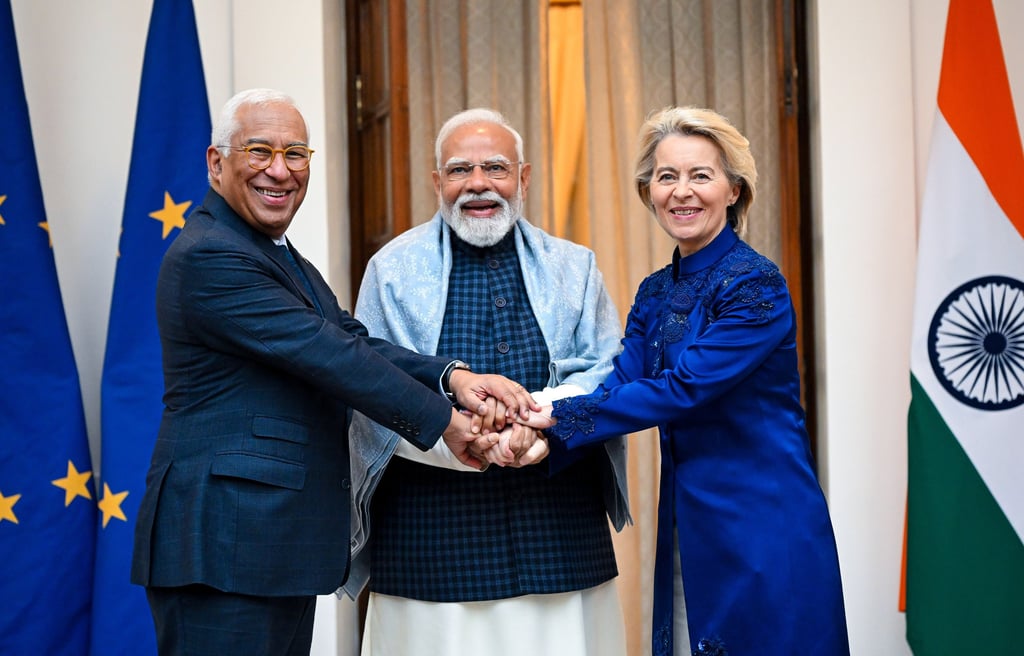
© European Union, 2026 – Source: audiovisual.ec.europa.eu
Used for editorial context only
This article reflects industry developments relevant to EU–India trade. The European Union is not affiliated with or endorsing our company or services.
European Council President António Costa, Indian Prime Minister Narendra Modi, and European Commission President Ursula von der Leyen at the Delhi summit.
Get in touch for engineering solutions.
Connect
© 2026 RZ Global Solutions Limited All rights reserved.
Legal Compliance
Blog

RZ Global Solutions Limited
Registered in England & Wales
Company No: 16718910
Registered Office:
RZ GLOBAL SOLUTIONS LIMITED 4th Floor, Silverstream House 45 Fitzroy Street, Fitzrovia, London W1T 6EB
Facilities
Explore
Case Study
Product design development
Component sourcing
Automoble
Ralway Locomotve
Hydraulics